

Used Robot Listing Acceptance: Explain the Photo Set
2026-11-01
Used Robot Listing Acceptance: Explain the Photo Set
A marketplace contributor delivers a used-robot listing with a polished photo set. Some pictures show an entire installation and others show isolated details, but the receiving editor cannot tell which images depict the offered asset. Accepting the listing should begin with that association. The example here is an imaginary editorial submission, with original conceptual illustrations rather than photographs of a machine offered for sale.
Sort the images by their stated purpose
Request the contributor's description of what each picture is intended to communicate. An overview may introduce the installation, a detail may identify a component, and a generic image may explain a product family. These purposes are not interchangeable. The editor should preserve them in the listing rather than allowing a visually coherent gallery to imply that every image records the same asset.
For the fictional submission, the first unresolved question concerns an attractive overview picture with no clear relationship to the item being offered. The reviewer can request an asset-specific explanation without accusing the contributor of deception. The response may show that the picture is contextual, that it depicts a previous configuration or that it needs replacement. Each explanation leads to a different editorial treatment.
Write accessible meaning without adding unsupported facts
The W3C's informative images tutorial explains that text alternatives should convey the meaning or content presented by an image, according to its purpose. This helps an editor describe what the gallery communicates. It does not justify inserting an unverified condition claim into an image description.
An alternative text saying that a picture shows a controller cabinet is different from one claiming that the cabinet is fully refurbished. The latter adds a factual assertion that the picture may not establish. The visible caption and accessible description should remain consistent with the contributor's supported explanation. Avoid using either field to smuggle a sales promise past the listing review.
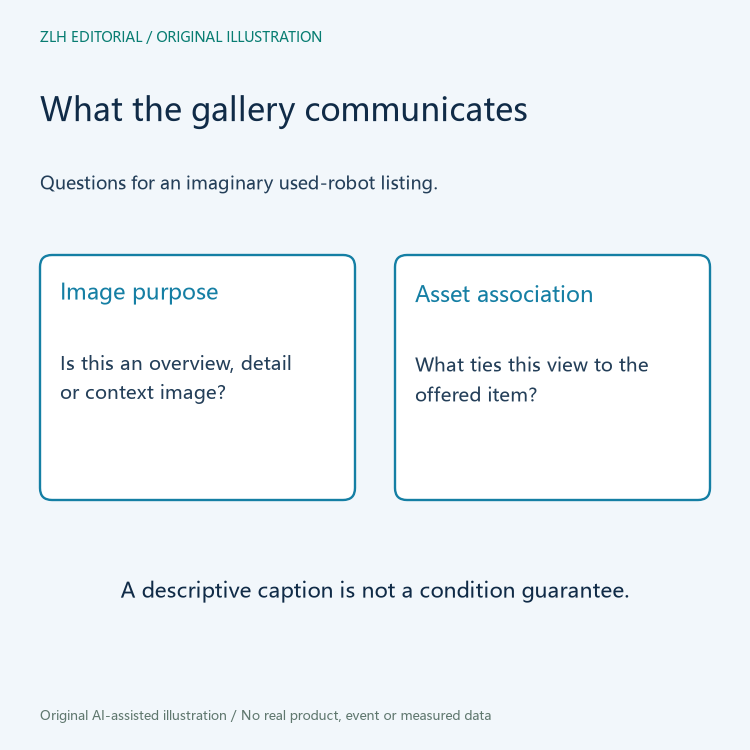
If a visual detail is important to the buying discussion, request a description that identifies the view and its limitation. An image can be clear enough to recognize a component while being insufficient to read its identification label. The reviewer should record what remains unreadable rather than transcribing guessed characters into the public listing.
Ask how the image relates to the offered asset
The W3C PROV Model Primer describes derivation relationships, including material produced from other material. Such relationships can help organize an account of an original image and an edited derivative. They do not establish that a photographed machine is owned by a seller or that its physical condition matches the listing.
Request the contributor's account of the gallery's origin and its association with the offer. Where editing or cropping affects interpretation, ask what changed and retain an appropriate source reference within the authorized editorial workflow. Do not demand publication of private documents merely to make the gallery look well documented. The intended evidence can be reviewed through an agreed private process where necessary.
Any claimed capture time or asset association needs its own support. A filename, upload timestamp or description supplied by a contributor should be identified as such. None should be silently promoted into an independently verified site visit. This article presents no actual photograph metadata, inspection appointment or seller record.
Use the missing view to define the next request
A gallery may be adequate for initial identification while leaving a buyer's specific question unanswered. Ask which additional view would address that question and whether an image is the appropriate evidence at all. A photograph cannot replace every document or observation needed for a transaction. The reviewer should avoid prescribing unsafe access to equipment to obtain a picture.
In the hypothetical review, a component label cannot be read from the submitted detail. The next editorial request is a legible, correctly associated view or another agreed identification record. It is not a blanket demand for more attractive pictures. Record the request against the affected listing field so a contributor can respond to the actual uncertainty.

Accept the gallery without inventing a condition guarantee
The completed photo review should identify the accepted views, their stated association and any limitation left visible to readers. It may conclude that the listing's illustrations are adequately explained while reserving judgment about operating condition, transferable rights or completeness of the offered equipment. Those subjects require evidence that a gallery alone does not provide.
The conceptual figures in this article contain no genuine seller image or machine condition result. Related buyer questions appear in the robot marketplace collection, with wider reading in the article directory. A useful listing makes it easier to ask the next informed question instead of treating a polished photo set as the conclusion of due diligence.


