

SQLite October Notes: A Column Header Can Outlive the Rows
2026-11-03
SQLite October Notes: A Column Header Can Outlive the Rows
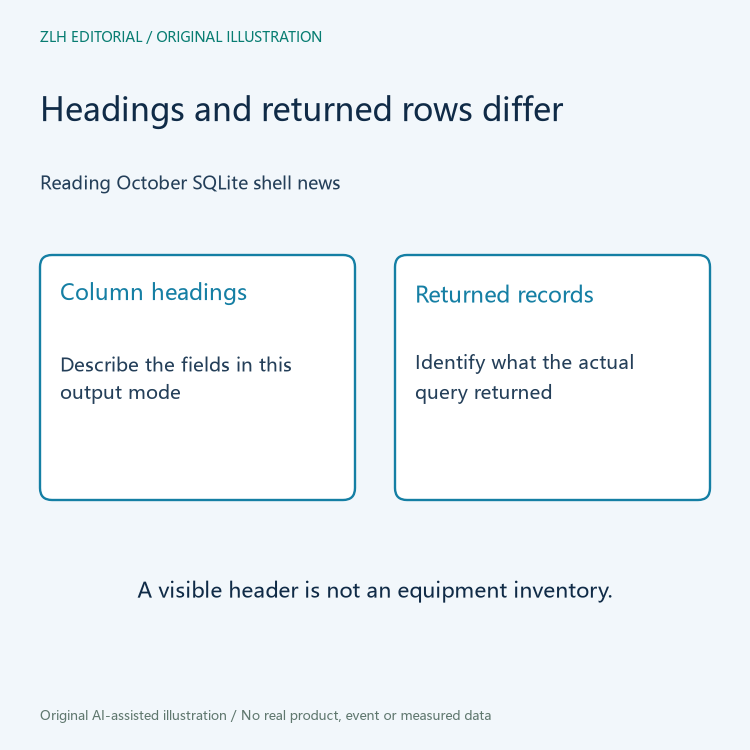
A column header in a robot-listing extract can look like evidence that a table contains records. The October SQLite notes are a useful reminder to examine the rows separately. SQLite 3.54.0, dated October 9, 2026, changed a default in the command-line shell: columnar output shows column-name headings even when a query returns no rows. A buyer reading an extract needs to identify what was actually returned, rather than infer an inventory from its visible headings.
The change belongs to the shell’s presentation
The official SQLite release history identifies the columnar-output change among the 3.54.0 shell enhancements. Its scope matters. The statement concerns how the command-line tool presents a query result. It does not say that the database inserted an extra record or that the underlying query found a machine for sale.
Keep that distinction beside the source date. This article interprets an October change, rather than announcing a new release today. It does not establish which shell a seller used, whether a listing portal uses that shell at all, or whether an image in a deal room came from a database query.
For a proposed marketplace review, the immediate question is simple: what in the supplied material identifies the returned records? A set of familiar column names is useful context, but it is not a substitute for that answer. The seller should identify the actual extract and the question it was produced to address.
Read the output mode before interpreting the layout
The official command-line shell documentation describes output modes and presentation controls. A receiving reviewer should retain the mode used for the supplied extract. Different presentations can make the same underlying question look different without establishing that the source records changed.
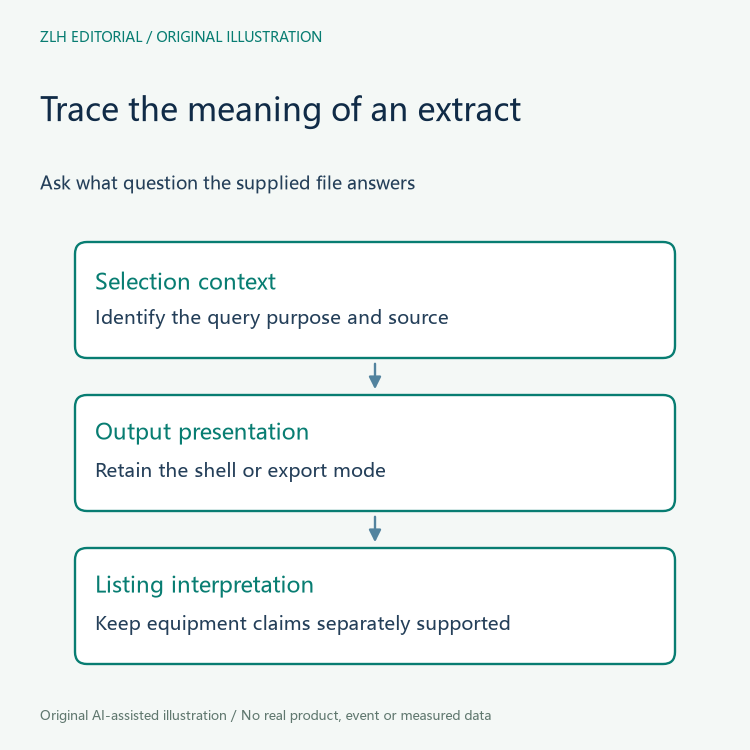
That is a reason to request an explanation of the supplied format, rather than a reason to reconstruct the seller’s environment from a screenshot. The present review runs no query and inspects no seller database. Its diagrams show the relationship between headings, results, and interpretation only.
A header can identify the expected meaning of a field while leaving the result empty. Conversely, a fragment showing values without headings can leave their meaning unclear. Both situations call for context; neither justifies inventing the missing part of a listing record.
An empty result answers a bounded question
If an actual query returns no records, its interpretation still depends on the query, the source, and the conditions under which it was run. It should not automatically be expanded into a claim that a seller owns no robots, that no matching equipment exists elsewhere, or that every related listing has been withdrawn.
A marketplace enquiry should ask which selection the extract represents. If the seller changes that selection, retain the earlier context beside the earlier result. A repeated file title does not establish that two extracts answered the same question.
The buyer also needs to distinguish an actual empty result from a document that merely omits the rows. Cropping, summarizing, and exporting are activities that require their own explanation. This article supplies no example seller record and no finding about an actual inventory.
Keep the extract separate from the equipment claim
A database presentation can support discussion of a listing without proving the condition, ownership, or availability of a physical machine. Those claims need the relevant documents and responsible parties. A neat output table should not acquire more authority than its stated source and purpose provide.
If a seller later provides a corrected extract, identify which earlier object it replaces and why. A receiver should be able to tell whether the change addressed presentation, query scope, source content, or a different issue. Calling every change an updated inventory can conceal the distinction the review needs.
For an unresolved enquiry, leave the open question in the record. It is better to ask how returned records are identified than to fill the table with a plausible demonstration row. A fictional row could be mistaken for equipment that was never listed. Ask the document owner to identify whether the supplied view is complete before relying on the absence of visible rows.
Make the software news useful to a listing reader
The practical editorial lesson is to connect a visible layout with its documented presentation context and the actual question behind the extract. The release note supplies the narrow software fact. The receiving review still needs evidence about its own document and the equipment claim being considered.
Related questions appear in our robot marketplace records section and the reading directory. Both original illustrations contain no real query output, seller database, robot inventory, ownership record, or completed due-diligence finding.


